BHAVYA Industrial Park Scheme 2026: Outlay, Tenure, Parks
BHAVYA industrial park scheme: Rs 33,660 crore over six years from 2026-27 for 100 plug-and-play parks, run by NICDC under DPIIT, and how parks are chosen.
Law as last checked on 21 March 2026. Notifications change; confirm the current text before acting.
Scheme approved; guidelines awaited
The Cabinet approval of 18 March 2026 set the outlay, structure and selection model. Operational guidelines, the first-phase park list and allotment terms follow from DPIIT and NICDC. Check the current position before committing to a location.
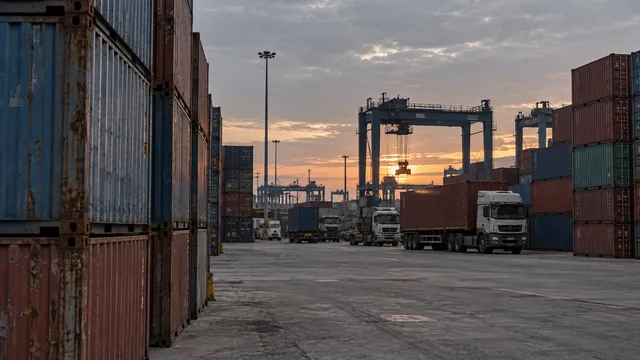
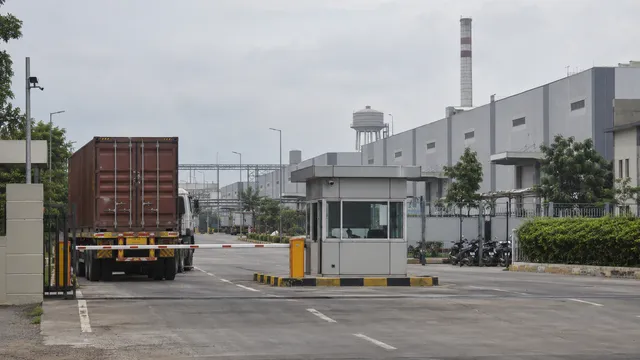
On 18 March 2026 the Union Cabinet approved the Bharat Audyogik Vikas Yojna (BHAVYA) with an outlay of Rs 33,660 crore. The scheme proposes 100 plug-and-play industrial parks across the country, implemented by the National Industrial Corridor Development Corporation (NICDC) under the Department for Promotion of Industry and Internal Trade, and builds on the industrial-corridor model NICDC already runs in 20 projects across 13 states. It is an infrastructure programme, and it is worth being clear at the outset about what it is not: it creates no new duty or tax regime. A unit in a BHAVYA park will still decide whether to operate in the domestic tariff area, under MOOWR, as an EOU, or, where a park is notified, as an SEZ unit.
What was approved
Parameter
Approved position
Outlay
Rs 33,660 crore
Parks
100 plug-and-play parks; about 50 in the first phase
Area
About 33,600 acres in total; parks of 100 to 1,000 acres, 25 acres in hill and north-eastern states
Central assistance
Up to Rs 1 crore per acre for core infrastructure; up to 25% of project cost for external connectivity
Employment
About 15 lakh direct jobs projected
Period
Six years from 2026-27
Implementing agency
NICDC under DPIIT
What "plug-and-play" is meant to include
The stated intent is that a unit should arrive to find the pre-production work done:
internal roads and underground utility corridors for power, water and gas, so that later connections do not require digging;
drainage and common effluent treatment;
digital connectivity;
pre-built factory sheds, testing and certification laboratories, warehousing and logistics facilities;
worker housing and commercial amenities;
external links to highways, rail and ports aligned with PM GatiShakti planning, and green energy and waste management built in.
How parks will be chosen
Selection is by challenge mode. States submit proposals and are scored on investment-readiness, ease-of-doing-business reforms, single-window clearance, transparent and bankable land allocation, connectivity and workforce, and proximity to existing clusters. Each selected park will be developed and managed by a dedicated special purpose vehicle with statutory planning and single-window powers. The design is deliberate: states that have done the regulatory work get the parks, which is also a signal to a business about where approvals are likely to be quickest.
How BHAVYA fits with the zone regimes
For a manufacturer deciding where and under what status to set up, BHAVYA adds a location option, not a fiscal one. The combinations to consider:
Duty deferred on imported inputs and machinery; no export obligation
Customs licence for the premises
EOU
Duty-free imports and domestic procurement against positive NFE
Letter of permission from the Development Commissioner; bonding
SEZ unit
Full exemption and zero-rated supplies against positive NFE
The park, or a part of it, must be notified as an SEZ and a unit approved by the Unit Approval Committee
Two observations from our side. For SEZ developers, a well-located BHAVYA park with state-subsidised infrastructure is a competitor for the same tenants, and the case for an SEZ will rest more heavily on its fiscal treatment than on its infrastructure. For FTWZ operators, parks that sit on the planned corridors create demand for duty-free warehousing and value-addition close to the factory gate.
Risks to watch
Whether states with the highest industrial demand move fast enough on land and proposals.
Whether the first-phase timeline holds, given the record of large infrastructure programmes.
Whether infrastructure quality is consistent across states once allotment begins.
How the parks coordinate with PLI schemes, NICDP projects and GatiShakti planning in practice.
What to do now
If you are planning capacity in the next three to five years, add the likely first-phase states to your location shortlist and track the challenge-mode outcomes.
Decide your Customs status on the merits of your sales mix, not the park: MOOWR for domestic-led, EOU or SEZ for export-led.
If you hold an EOU or Section 65 licence and may relocate, plan the transfer of bonded stock and the fresh premises approval before signing for land.
In short
On 18 March 2026 the Union Cabinet approved the Bharat Audyogik Vikas Yojna (BHAVYA): Rs 33,660 crore over six years from 2026-27 for 100 plug-and-play industrial parks, about 50 in the first phase.
Parks will be 100 to 1,000 acres (25 acres in hill and north-eastern states) with central assistance of up to Rs 1 crore per acre for core infrastructure and up to 25% of project cost for external connectivity.
States compete for parks in 'challenge mode' on investment-readiness, single-window clearance and land policy; each park is run by an SPV with statutory planning powers.
BHAVYA is infrastructure, not a fiscal regime. A unit in a BHAVYA park still chooses its Customs and tax status separately: DTA, MOOWR, EOU, or, if the park is notified, SEZ.
Questions we are asked about this
Is a BHAVYA park an SEZ?
No. BHAVYA funds land and infrastructure; it does not by itself create a Customs-bonded area. A park, or part of one, could be notified as an SEZ or host EOUs and MOOWR units, but each of those comes through its own law and approval.
Can an existing manufacturer relocate into a BHAVYA park and keep its EOU or MOOWR status?
EOU and Section 65 approvals are premises-specific. A relocation requires fresh approval for the new premises, with transfer of the bonded goods under Customs permission. It is routine but must be sequenced so that the duty-deferred stock is never in an unlicensed place.
When will plots be available?
The approval sets a six-year programme with roughly 50 parks in the first phase. Allotment depends on state proposals clearing the challenge process and on the SPV for each park being constituted. Expect the first allotments well after the operational guidelines are published.
Primary sources
The instruments this article relies on. Links go to the issuing authority; search the document number there for the text in force.