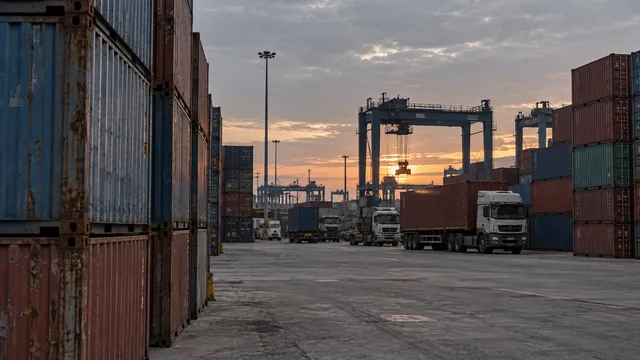
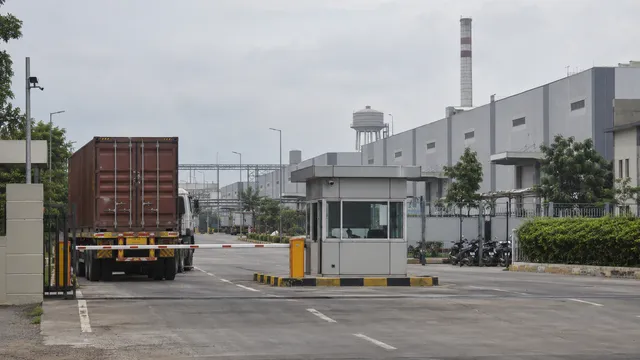
An FTWZ lets a trader land goods in India without paying duty, keep owning them while they sit, sell or re-ship them from inside the zone, and pay duty only on what is released into the Indian market. It is the same instrument that made Jebel Ali the entrepot of the Arabian Sea, and India has had it since 2005.
A Free Trade Warehousing Zone is a category of Special Economic Zone created under the SEZ Act, 2005 and the SEZ Rules, 2006, dedicated to trading, warehousing and logistics rather than manufacturing. For customs purposes, an FTWZ is deemed to be outside India's customs territory. Goods brought into it from abroad are not imported into India; goods sent from India into it are treated as exports. That single legal fiction, which I spent many years administering on the customs side, is what makes the zone useful.
For four decades the world's traders used the Dubai version of this instrument and had no reason to look further. Since 28 February 2026, when the Strait of Hormuz closed to normal commercial traffic, they have had a very good reason. This page is for the trader deciding whether an Indian zone is the answer: what it gives you, what it costs against a bonded warehouse, whether it fits your goods, and where the zones are.
What an FTWZ actually gives a trader
In practical terms, it means:
- No customs duty on entry. Foreign goods enter the zone without payment of basic customs duty, IGST or cess. Duty becomes payable only if, and when, and to the extent that, goods are cleared into the domestic market. Goods re-exported to a third country attract no Indian duty at all.
- Foreign ownership of inventory. A foreign supplier may hold title to goods lying in an FTWZ without an Indian importer of record. The unit in the zone provides warehousing and handling; the foreign owner sells when and to whom it chooses. This is the feature that made Jebel Ali attractive, and it exists in Indian law. The rule that says so is Rule 18(5) of the SEZ Rules, and it is short.
- Re-invoicing and re-sale. Goods may be re-sold, re-invoiced and re-exported from the zone, and settled in foreign currency. Since the Finance Act, 2025 it is also settled that a sale inside the zone, before the goods are cleared anywhere, attracts no GST.
- Value added services on the goods. Labelling, packing, repacking, kitting, palletisation, bar coding, quality inspection and sorting are all done inside the zone. A trader can buy in bulk from one origin and ship consumer-ready consignments to several destinations.
- Long term storage. Goods can remain in the zone for extended periods, with operators commonly citing up to five years, against the tighter timelines of a conventional bonded warehouse.
- 100 per cent FDI on the automatic route. A foreign company can set up its own unit in an FTWZ without prior approval.
- Customs on site. Every zone has a Customs office within its gate, with clearances processed through the SEZ Online portal rather than the general port queue.
Supplies from India into an FTWZ are zero rated under GST and count as exports, so an Indian exporter can position stock in the zone, earn export benefits, and have it lifted by foreign buyers in smaller lots over time.
FTWZ, SEZ, FTZ or free trade zone: which is which
These get used interchangeably in conversation and they are not the same thing. If somebody offers you an FTZ in India, they are using an American word for an Indian thing; ask which of these they mean.
| Term | What it actually is | Where |
|---|
| FTWZ | A Special Economic Zone for trading and warehousing, Section 2(n) of the SEZ Act, 2005 | India |
| SEZ | The parent framework. Most zones are for manufacturing or services; the FTWZ is the trading variety | India |
| FTZ (Foreign Trade Zone) | The United States scheme under its Foreign-Trade Zones Act of 1934. There is no FTZ in India | United States |
| Free trade zone | A generic description, not a statute. Jebel Ali, Shanghai and Port Klang are all called this | Worldwide |
| Bonded warehouse | A licensed warehouse inside India's customs territory. Duty is deferred, but the goods have been imported | India |
FTWZ vs bonded warehouse: where the money goes
Most Indian importers reach first for a customs bonded warehouse, and for many consignments that is right. Both give you duty deferment. The difference is what happens while the goods wait, and who has to own them.
| Bonded warehouse | FTWZ |
|---|
| Interest on deferred duty | Starts on the ninety-first day and runs until clearance, Section 61 of the Customs Act | None. The goods have never been imported |
| Who must own the goods | An Indian importer, on its own books, from day one | The foreign supplier can keep title until a buyer is found |
| Work on the goods | Inspect, sort, repack, with the officer's sanction | Label, pack, repack, kit, bar code, inspect, sort |
| Sale before clearance | No GST | No GST |
| Supply into it from India | Not an export | Zero rated export |
| Space cost | Cheaper per pallet | Dearer per pallet, plus a service fee |
The honest way to decide is to set the zone's fee against the duty you are not funding, the interest you are not paying, and the working capital released. For slow moving, high duty or high value lines, and for anything a foreign supplier wants to keep title to, the zone usually wins comfortably. For fast moving, low duty goods that will clear within ninety days anyway, a bonded warehouse is often the cheaper answer, and I would say so to a client.
Is an FTWZ right for your goods? Four questions
- How long will the stock sit? Under ninety days and clearing straight into India, a bonded warehouse is probably cheaper. Beyond that, the interest clock works against you and the zone pulls ahead.
- Who owns the goods on arrival? If a foreign supplier wants to keep title until an Indian or third country buyer is found, only the zone allows it. This is the single most common reason to choose one.
- Is the destination settled? If part of the shipment may be re-exported, the zone keeps that option open at no Indian duty cost. If everything is going into India regardless, that flexibility is worth less.
- Will the goods be manufactured on, or only handled? Manufacturing points to MOOWR or an ordinary SEZ unit. Holding, sorting, kitting and re-shipping point to the FTWZ, because the zone permits handling but not processing.
If the answers point to a zone, do one more thing before committing the inventory: run a single consignment through first. Most of what goes wrong in these structures goes wrong in the first shipment, and it is far cheaper to find that out on one container than on a quarter's stock.
Where the zones are: Mumbai, Chennai, Mundra, Kochi and Delhi
The right zone is almost always the one closest to the shipping lane your goods already use. On the west coast, DP World runs a zone beside Jawaharlal Nehru Port at Nhava Sheva, and Arshiya runs one at Panvel; between them they cover the corridor that carries most of India's containerised trade. In Gujarat, the Mundra SEZ has had a working FTWZ since 2017, eight kilometres from the port and closest of all to the Gulf lanes. On the east coast, DP World's zone at Chennai and a further zone at Sri City serve the ASEAN routes and the southern automotive belt. DP World also operates at Kochi, beside the Vizhinjam transhipment port. Inland, Arshiya's zone at Khurja near Delhi serves goods whose final market is the north.
The point about DP World is worth pausing on. The company whose Dubai terminal is idle is the same company holding warehousing capacity inside three Indian ports. A trader who has spent twenty years working with DP World in Jebel Ali can, in many cases, work with DP World in Nhava Sheva.
Why now: the Gulf gateway has stalled
Jebel Ali handled 15.5 million TEUs in 2024. In the second quarter of 2026 it handled 374,000, a fall of more than 90 per cent year on year, and the traders who used it as their regional stock point are looking for a second base. The case for putting that base in an Indian zone, and what to do about it, is set out separately in what an Indian Free Trade Warehousing Zone gives a trader.
If you are weighing the zone against a bonded warehouse for goods already coming to India, the four questions above are the ones that decide it. Send your product, duty rate and holding time to the firm's FTWZ advisors and a senior advisor will say which costs you less.