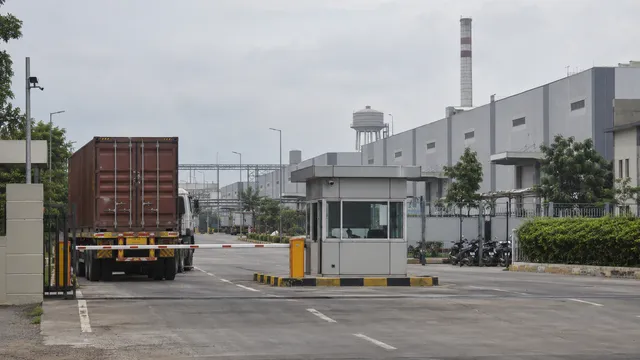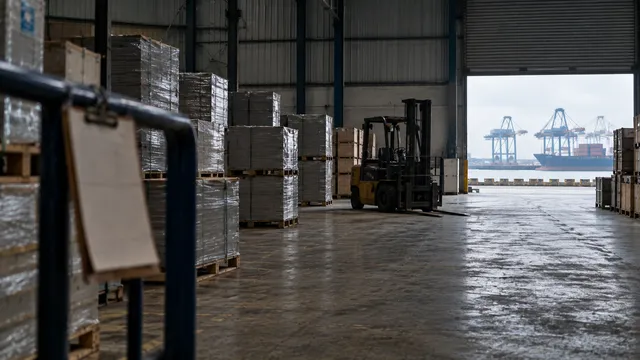

For four decades the world's traders treated Jebel Ali as the default halfway house between Asia, Africa and Europe. Goods landed there, sat duty free, were relabelled, reinvoiced and reshipped to a third country without ever entering anyone's customs territory. That model worked because the Strait of Hormuz was always open. Since 28 February 2026 it has not been.
The numbers are stark. Jebel Ali handled 15.5 million TEUs in 2024. In the second quarter of 2026 it handled 374,000, a fall of more than 90 per cent year on year. Cargo now comes overland from Fujairah and Khor Fakkan, where trucks queue up to twelve hours against a twenty seven minute turnaround inside the port. At the end of August about six vessels a day were passing through the strait, against roughly eighty five before the war. The free zone that houses more than 8,700 companies has, for practical purposes, gone quiet.
I do not write this with any satisfaction. Dubai has been a good partner to Indian trade, and DP World, which operates Jebel Ali, is itself one of the largest investors in India's own zones. But a trader's first duty is to keep goods moving, and anyone whose business rests on a Gulf transit hub now needs a second, stable base. India has one ready, and it is under used.
What a Free Trade Warehousing Zone is
An FTWZ is a category of Special Economic Zone created under the SEZ Act, 2005 and the SEZ Rules, 2006, dedicated to trading, warehousing and logistics rather than manufacturing. For customs purposes the zone is deemed to lie outside India's customs territory. Goods brought into it from abroad are not imported into India, and goods sent into it from India are treated as exports. That single legal fiction, which I spent many years administering from the other side of the counter, is what makes the zone useful.
- No duty on entry. Foreign goods enter without basic customs duty, IGST or cess. Duty falls due only if, when and to the extent that goods are released into the domestic tariff area. Goods re exported to a third country attract no Indian duty at all.
- The foreign owner keeps title. Rule 18(5) of the SEZ Rules lets a unit in the zone hold goods on a foreign supplier's account. No Indian importer of record is needed until the goods are released into India. This is the feature that made Jebel Ali attractive, and it exists in Indian law.
- Re sale and re invoicing. Goods may be re sold, re invoiced and re exported out of the zone, and the transaction may be denominated and settled in foreign currency.
- Work on the goods. Labelling, packing, repacking, kitting, palletisation, bar coding, inspection and sorting are permitted inside the zone, so a trader can buy in bulk from one origin and ship consumer ready consignments to several destinations.
- Time. Stock can sit for years, against the ninety day interest clock that runs in an ordinary bonded warehouse.
- Ownership and access. A foreign company may set up its own unit with 100 per cent FDI on the automatic route, and every zone has a Customs office inside the gate working through the SEZ Online portal rather than the general port queue.
Supplies from India into a zone are zero rated and count as exports, so an Indian exporter can position stock in the zone, take the export benefit, and let overseas buyers lift it in smaller lots over time.
The market behind the wall
The scale of the Indian market is the other half of the case. India's total exports for 2025-26 were a record US$863.1 billion, of which merchandise was US$441.8 billion. Total imports were US$979.4 billion, with merchandise imports alone near US$775 billion. India is a trillion dollar trading economy that buys far more goods than it sells.
For a foreign trader that means a market of enormous absorptive capacity sitting immediately behind the zone wall. Stock held duty free can be sold into India in tranches as demand appears, with duty paid only on what is released, or re exported to Africa, the Gulf, South East Asia or Europe if a better price shows up elsewhere. For an Indian trader the same zone is a staging post for exports and a place to consolidate inputs from several origins before deciding whether to bring them into India at all.
The ecosystem is working: exports from operational zones crossed ₹11.70 lakh crore in the first nine months of 2025-26, a rise of 32 per cent. The UAE remains one of India's largest export markets, and routing that corridor through an Indian zone keeps it moving while the Gulf recovers.