CBIC's March 2026 Circulars on Returned Export Cargo
What CBIC Circulars 09, 10, 12 and 15 of 2026 allowed when the Strait of Hormuz closure turned export cargo back: cancellations, waivers and the relief window.
Law as last checked on 15 April 2026. Notifications change; confirm the current text before acting.
Time-bound relief: window closed
The facilitation measures described here applied to consignments up to 15 April 2026. The framework stands; the relief window does not. Check the current position before acting.
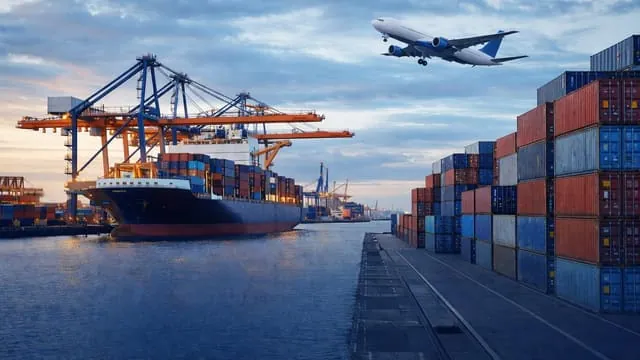
The closure of the Strait of Hormuz in March 2026 stopped vessels carrying Indian export cargo from reaching their destinations. Ships turned back; containers with Let Export Orders already issued came home; exporters faced cancelled sailings, fee liabilities and incentive claims already lodged. CBIC responded under Section 143AA of the Customs Act, 1962, which allows the Board to prescribe simplified procedures for trade facilitation, with four circulars in three weeks. This article sets out what each allowed and what an exporter should take from them now that the window has closed.
Circular 09/2026-Customs, 8 March 2026: cargo returning from international waters
The first circular created three tracks according to how far the vessel had travelled:
Within Indian territorial waters, EGM not filed. No Sea Arrival Manifest; the master gives an undertaking that the vessel did not leave territorial waters. Containers may be landed without a bill of entry after the shipping documents and seals are verified. Shipping bills and LEOs are cancelled and the cargo returned to town on request.
Within territorial waters with EGM filed, or returned from international waters without calling a foreign port. Same undertaking and exemption from SAM; containers landed on verification. DG Systems was directed to build an ICES facility to cancel shipping bills after EGM, with cancellations reported to RBI, DGFT and other agencies through ICEGATE so that incentives are not wrongly paid.
Returned after calling a foreign port without discharging. Treated as exported and re-imported: SAM is filed, and the Track B procedure follows.
Circular 10/2026-Customs, 10 March 2026: fee waiver for force majeure
Amending or cancelling a shipping bill attracts a fee under the Levy of Fees (Customs Documents) Regulations. The Board clarified, under clauses (c) and (d) of Section 143AA, that the proper officer may permit amendment or cancellation without the fee where it is necessitated solely by force majeure: cancelled flights, withdrawn or rescheduled vessels, carrier service disruption, closure of a port or airport, natural disaster or government transport restrictions. The exporter or its customs broker applies to the jurisdictional Deputy or Assistant Commissioner with evidence, typically the carrier's notice. The waiver applied at every Customs station and was initially valid for fifteen days.
Circular 12/2026-Customs, 17 March 2026: landing at a different port, and transhipment
Circular 09 assumed the vessel returned to its port of departure. Many did not. Circular 12 provided that where a vessel lands at a different Indian port, the line files a SAM at the landing port using a dummy port code for vessels that called no foreign port; the proper officer verifies containers and seals; and on the exporter's request the landing port coordinates with the port of export to check incentive disbursements and cancel the shipping bill and LEO before permitting return to town.
The same circular extended international transhipment of LCL cargo, previously confined by Circular 14/2007 to four ports, to all notified ports and international airports until 31 March 2026, with Chief Commissioners empowered to extend. It also allowed liquid-bulk and break-bulk vessels diverted to an Indian port to unload temporarily into a Customs area, bonded warehouse or bonded tank, under bond and supervision, solely for onward transhipment or re-export.
Circular 15/2026-Customs, 27 March 2026: transhipment widened and systematised
International transhipment of both FCL and LCL cargo permitted from all seaports and international airports, including movement through intermediate Customs stations.
Each Customs zone to designate a nodal officer of at least Additional or Joint Commissioner rank for transhipment requests.
Multi-station movements to proceed on prior consent between nodal officers by official email, after the receiving station confirms storage and handling capacity; movement under Customs control with sealing where required.
Export cargo cleared at an ICD and lying at a gateway port: the originating ICD may cancel the LEO and shipping bill remotely, and the gateway port may release the cargo for return or re-routing without sending the containers back to the ICD.
Bangladesh cargo lying at JNPT and requiring onward movement through Mumbai airport noted as under examination.
The relief timeline, including Circular 12's, extended to 15 April 2026.
The circular also pressed zones and DG Systems to operationalise the Sea Cargo Manifest and Transhipment Regulations, 2018, whose implementation had been repeatedly deferred, citing the crisis as evidence of why a working electronic transhipment framework matters.
What an exporter should keep from this
The force-majeure principle. Circular 10 records the Board's view that an exporter should not pay Customs fees for amendments forced by a carrier's failure. That reasoning is available in any future disruption, and a request framed on it, with the carrier's notice attached, is far stronger than a plea for sympathy.
Incentive recovery is automatic. Cancelling a shipping bill after drawback or IGST refund has been paid triggers recovery. Reconcile before the demand arrives, and repay with interest where the claim is unanswerable.
Nodal officers exist. Each zone now has a named officer for transhipment matters. Identify yours before you need them.
Documentation decides the outcome. Vessel undertakings, line notices and port advisories were the evidence the circulars required. A file that was assembled on the day the vessel turned back is the one that cleared fastest.
What to do if it happens to you
List every shipping bill on the affected vessel and its incentive status: drawback paid, IGST refund received, scrip claimed.
Obtain the carrier's written notice of the cancellation or diversion on the day it is issued.
Apply to the jurisdictional Deputy or Assistant Commissioner for cancellation or amendment, citing the force-majeure ground and any current circular.
Decide, consignment by consignment, between return to town, re-export from the landing port, and transhipment, and engage the zone's nodal officer where transhipment is the answer.
In short
Between 8 and 27 March 2026 CBIC issued Circulars 09, 10, 12 and 15 of 2026 under Section 143AA of the Customs Act to deal with export cargo turned back by the Strait of Hormuz closure.
They allowed returned containers to be landed and shipping bills cancelled without a bill of entry, waived amendment and cancellation fees where force majeure was shown, and opened international transhipment of FCL and LCL cargo from all ports and airports under zone nodal officers.
Export incentives already paid on cancelled shipping bills were to be recovered; cancellations were reported to RBI and DGFT through ICEGATE.
The relief window ran to 15 April 2026. The procedures remain a template for the next disruption, and the force-majeure fee waiver principle is worth citing whenever a carrier cancels a sailing.
Questions we are asked about this
Our cargo came back after the window closed. Does any of this still apply?
The specific relaxations lapsed on 15 April 2026 unless the zone extended them. The underlying powers under Section 143AA and the Levy of Fees Regulations remain, and a request to the jurisdictional Deputy or Assistant Commissioner citing the same force-majeure reasoning is the right route. We would frame it on the facts of your consignment.
We received drawback and IGST refund on a shipping bill that was later cancelled. What happens?
The circulars direct field formations to recover incentives disbursed on cancelled shipping bills. Expect a demand, and reconcile it against your bank realisation and refund records before responding; voluntary repayment with interest is usually cheaper than contesting a recovery.
Can we re-export returned cargo from a different port?
Circular 12/2026 allowed a vessel that landed at a different Indian port to discharge there, with the landing port coordinating with the port of export to cancel the shipping bill. A fresh shipping bill from the new port then follows the ordinary procedure.
What is SCMTR and why did the circular mention it?
The Sea Cargo Manifest and Transhipment Regulations, 2018 are the electronic manifest and transhipment framework whose full implementation has been deferred for years. Circular 15/2026 pointed to the crisis as the reason to finish it; when it is enforced, manifest filing obligations for carriers and forwarders change materially.
Primary sources
The instruments this article relies on. Links go to the issuing authority; search the document number there for the text in force.